


A Visual Identity Rooted in Our History
A visual identity is more than a logo. It is everything — symbols, colors, typography — working together to express who an organization is and what it stands for. For The Wildlands Conservancy, that identity has always been rooted in the aesthetic vision of our co-founder, David Myers.
David had a deep appreciation for the American Craftsman tradition, a style that celebrated handcraftsmanship, natural materials, and design that felt at home in its surroundings. That sensibility shaped far more than our first logo. It found its way into the architecture of our preserve facilities and the care we bring to how those places feel when visitors arrive. From the beginning, The Wildlands Conservancy’s visual world reflected David’s belief that the places we steward should inspire wonder.
1995-2016
The Original Logo

When The Wildlands Conservancy was founded in 1995, David created our first logo by hand, cutting and pasting elements together on paper.
The result was a circular seal rendered in warm earth tones: a figure seated on a rock, a distinctive tree, mountains rising behind. Encircling the image were our name and, along the bottom, the words that have guided us ever since: Behold the Beauty.
The lettering had the quality of something engraved rather than printed — classical, unhurried, built to last. It was an identity that felt at home on letterhead and preserve signage alike, and it announced clearly, from the very beginning, what kind of organization The Wildlands Conservancy intended to be.
2016-
The Heritage Logo

As the organization grew, so did the demands on our visual identity. The original hand-crafted seal was rich with meaning, but difficult to reproduce clearly across all the ways an organization communicates. It was time for something new — though not entirely.
The process took months. Working with a design firm, and drawing on the same spirit David had always brought to questions of aesthetics, we assembled inspiration digitally — pulling together images that captured the feeling we were after. The look and energy of classic national parks posters kept rising to the top. From that process came the arched frame, which carried a memory of the original circular seal while giving the mark a strong, grounded base. The color palette was developed with equal care.
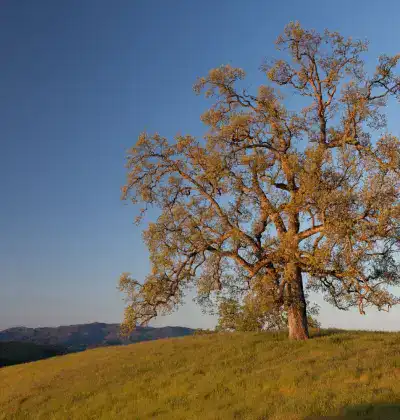
But one element needed no reimagining. The tree from David’s original 1995 logo was carried over exactly as it was, root to crown, into the new design.
The result was a logo that felt both fresh and deeply familiar. More detailed and vibrant than its predecessor, it stayed true to the values David had built into the identity from the start. The heritage logo remains an important part of who we are and will continue to be used throughout the organization.
2026-
A Refreshed Logo for the Digital Age

As communication increasingly takes place online, logos need to work across websites, mobile devices, and social media platforms where fine detail can be difficult to reproduce. Our heritage logo was designed for signage and print, and at smaller digital sizes, much of its richness is lost. Rather than replace it, we worked with a design firm to create a complementary mark built specifically for digital spaces.
The first round of designs kept the mountains and the raptor in flight, as the heritage logo has. It looked clean and confident. The iconography of conservation, which often includes mountains, rivers, birds, trees, is rich and shared for good reason. But it also made us ask: what is uniquely ours?
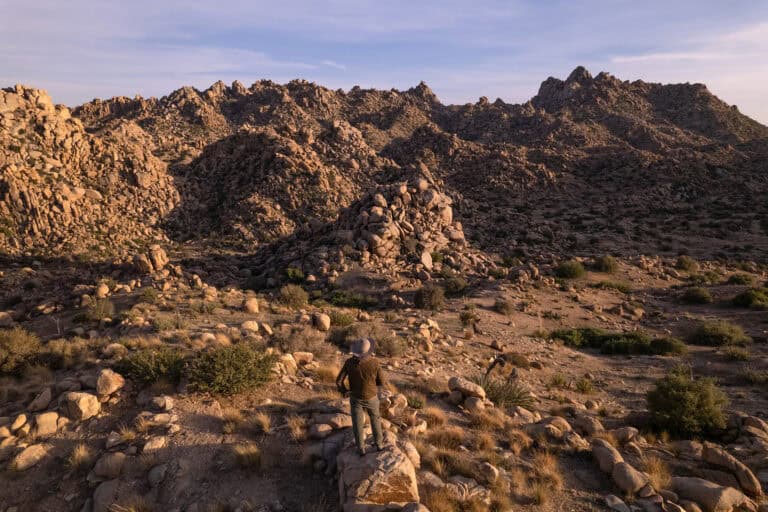
The answer was people. We open our preserves to everyone, free of charge, because access to nature is a birthright. Because standing in a wild place sparks wonder and joy and builds a reverence for the natural world that lasts a lifetime. We asked the firm to add a figure.
Simplicity required some difficult choices. The raptor had to go. And as much as we wanted to include a second figure — representing the next generation — the detail was lost at the small sizes where this mark needed to perform. Sometimes restraint is its own kind of intention.
The result carries forward the essential elements of the heritage logo: the arch, the mountains, the human figure, simplified for clarity without losing character. It feels unmistakably Wildlands.
A New Website Worthy of the Work
When we sat down with the design firm to describe what we were looking for in a new website, we didn’t start with a list of features. We told them about David.
We talked about his design sensibility, his belief that beauty and function were never at odds, and our desire to avoid the corporate feel that can creep in when organizations set out to modernize. We wanted to come home, in a sense. To embrace our roots after 30 years of dedication to this mission and to Beholding the Beauty. To honor what David gave us.
That meant bringing back an elegant serif typeface for headers. A warmer color palette. A feeling of unhurried intention that the natural world deserves.
But the new site is also built for the work ahead. Our pillars — Land Conservation, Land Stewardship, Restoration and Rewilding, and Public Access and Outdoor Education — now anchor the experience, giving visitors a clearer sense of the full scope of what we do. A timeline traces our history. Photos and bios put faces to the people behind the work. And rewilding, the next great chapter in American conservation, now has a place in the story.
David passed just over a year ago. But the sensibility he instilled here, the belief that beauty matters and that how a place feels is part of what makes it worth protecting, lives on in everything we build.