
A Legacy Written on the Land: Celebrating the National Monuments
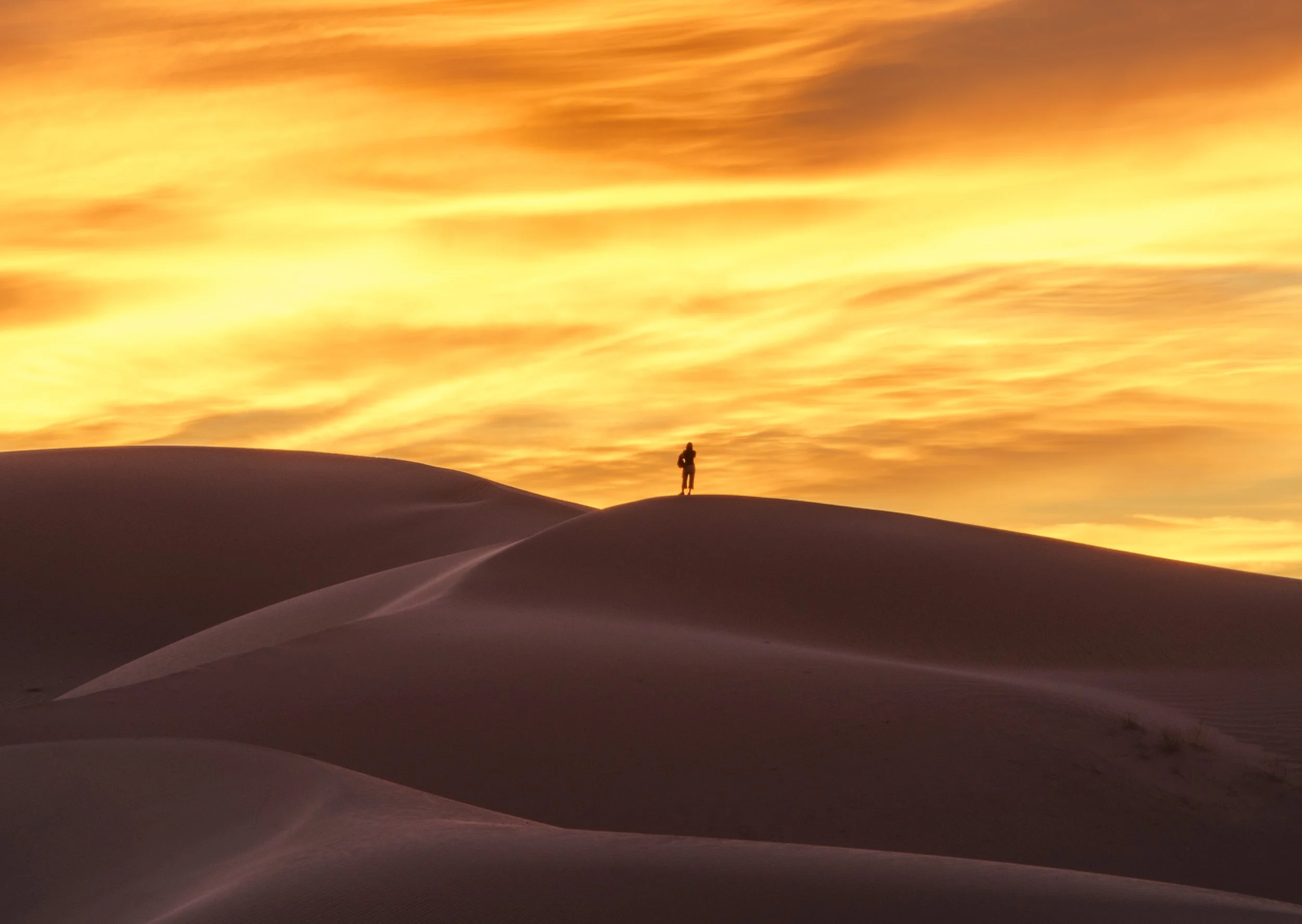
Cadiz Dunes, Mojave Trails National Monument—protected wilderness in California's Mojave Desert. Photo by The Wildlands Conservancy staff.
A decade ago, President Barack Obama used the Antiquities Act to establish three new national monuments — Sand to Snow, Mojave Trails, and Castle Mountains—in California's Mojave Desert, creating one of the largest desert reserves in the nation.
Both Sand to Snow and Mojave Trails national monuments — brought to life through decades of effort by The Wildlands Conservancy and facilitated alongside dedicated partners — reflect the organization's core belief: real conservation occurs through active efforts driven by vision. We protect more than just scenic views; we preserve vital life veins such as water sources in dry areas, wildlife migration routes affected by climate change, and cultural sites significant for thousands of years.
The Philosophy: Land First, Protection Forever
In the years leading up to the designation, The Wildlands Conservancy, led by our co-founder David Myers, protected more than 580,000 acres across the California desert through land acquisition, eliminating the risk of development at the heart of the Mojave Desert, Joshua Tree National Park, the Mojave National Preserve, and local wilderness areas. This acquisition strategy maintains the land’s natural, scenic beauty and protects the Mojave Desert’s heritage for generations to come.
Our strategy to purchase land, restore habitats, ensure permanent protection, and provide public access for free has enabled successes such as developing the land that would become Sand to Snow and Mojave Trails. This resulted in The Wildlands Conservancy making the largest conservation land gift in the nation’s history, adding 587,000 acres to the public estate managed by the National Park Service and the Bureau of Land Management, specifically for the conservation of the land, which would remain untouched by commerce and industry, representing one of our nation’s most extraordinary conservation achievements. A long-fought victory after years of vision, perseverance, and hands-on conservation efforts driven by The Wildlands Conservancy and committed partners.
The national monument proclamations withdrew these lands from new mining and mineral extraction, while cementing protection that acquisition alone couldn’t guarantee. This dual approach — the combination of private conservation creating the groundwork, federal designation ensuring permanence — reflects our core philosophy: use every available tool, work at every scale, but always ground the work in protecting actual acres.
From Desert Floor to Alpine Summit: Sand to Snow
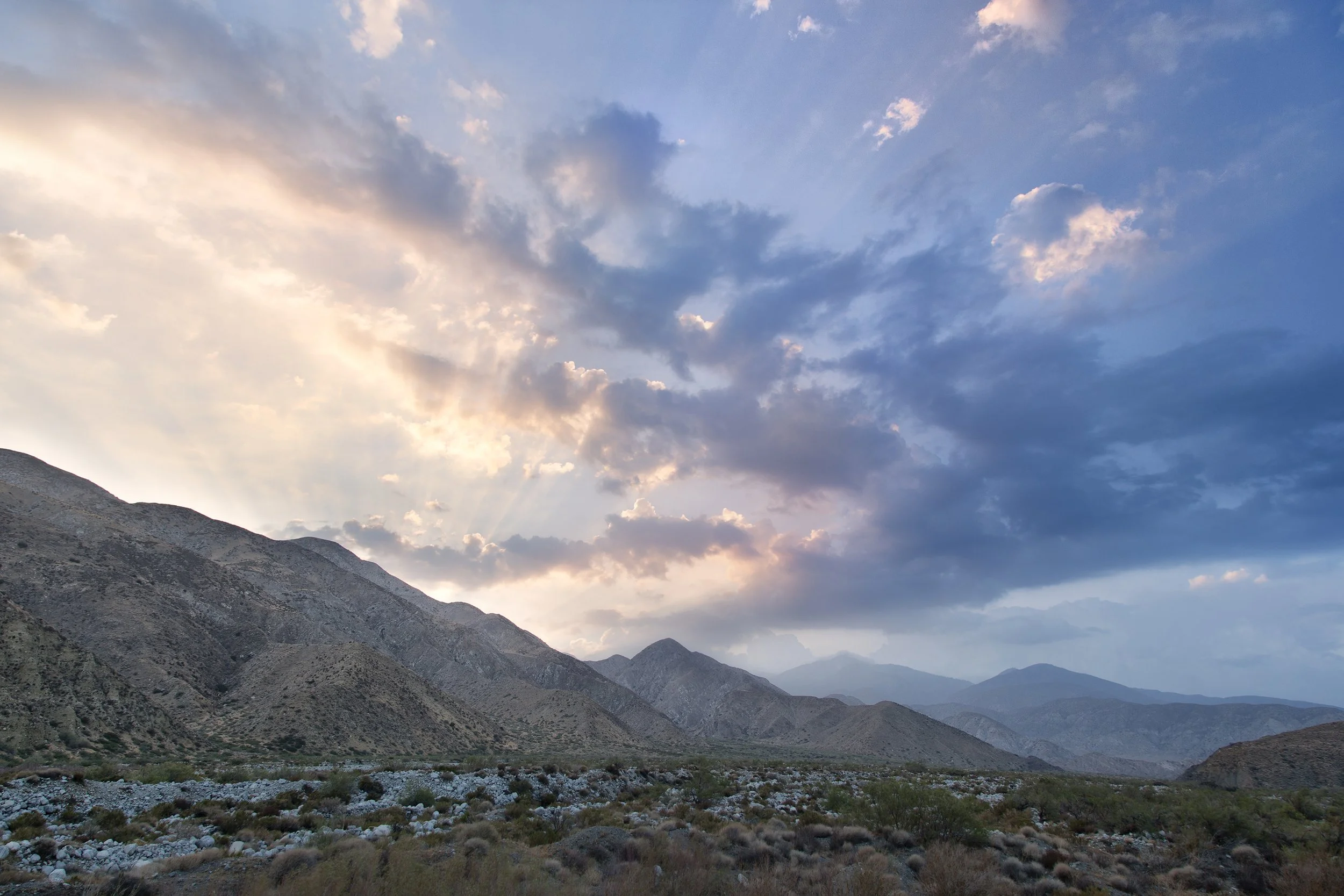
Dawn breaks over Whitewater Canyon as storm clouds sweep across the rugged slopes of Sand to Snow National Monument. Photo by Jack Thompson.
The 154,000-acre Sand to Snow National Monument protects one of North America’s most dramatic elevation gradients—from the Sonoran Desert floor at approximately 1,000 feet to the windswept summit of San Gorgonio Peak at 11,503 feet. This isn’t merely beautiful. It’s functionally essential.
The National Monument draws on The Wildlands Conservancy’s Sand to Snow Wilderness Interface Project, a long-term initiative that sought to use private land acquisition to purchase more than 60,000 acres to protect wildlife corridors threatened by development. These corridors were essential to wildlife movement and ecological connectivity by linking the San Gorgonio Wilderness, Joshua Tree National Park, Bighorn Mountain Wilderness, as well as the San Bernardino and San Jacinto Mountains. This effort grew into a larger campaign to gain increased protection for the public lands in these corridors, ultimately resulting in a diverse coalition of partners to successfully advocate to protect these landscapes as the Sand to Snow National Monument.
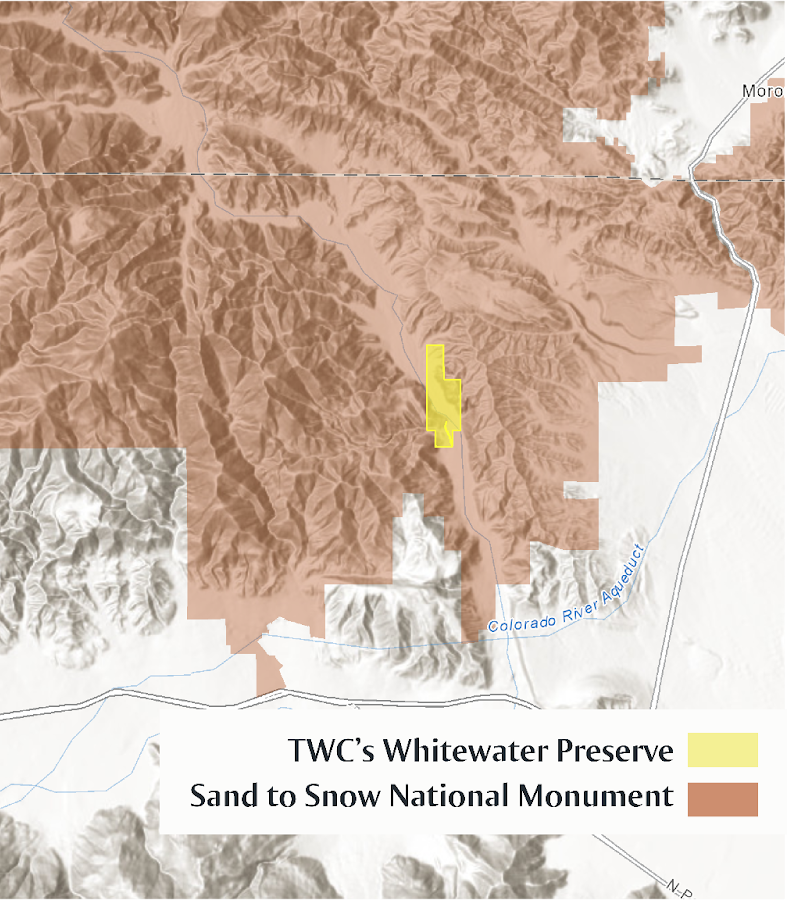
Whitewater Preserve (yellow) provides free public access into Sand to Snow National Monument, connecting visitors to 154,000 acres of protected wilderness.
Within the National Monument, more than 1,600 plant species thrive where five ecosystems converge — desert scrub, chaparral, oak woodland, conifer forest, and alpine tundra. Among them are 12 federally threatened or endangered animal species and 14 federally listed plant species. Over 240 bird species find the monument’s oases and canyons the perfect refuge, with Big Morongo Canyon recognized as one of the most important avian habitats in California. The Sand to Snow National Monument is also important for sensitive wildlife species such as desert tortoises and desert bighorn sheep. It is also a place for year-round recreation, from snowshoeing, birdwatching, and hiking, where people and wildlife all share a living landscape.
Visitation to the National Monument is encouraged and can be accessed for free through The Wildlands Conservancy’s Mission Creek and Whitewater Preserves.
The Heart of the Mojave: Mojave Trails
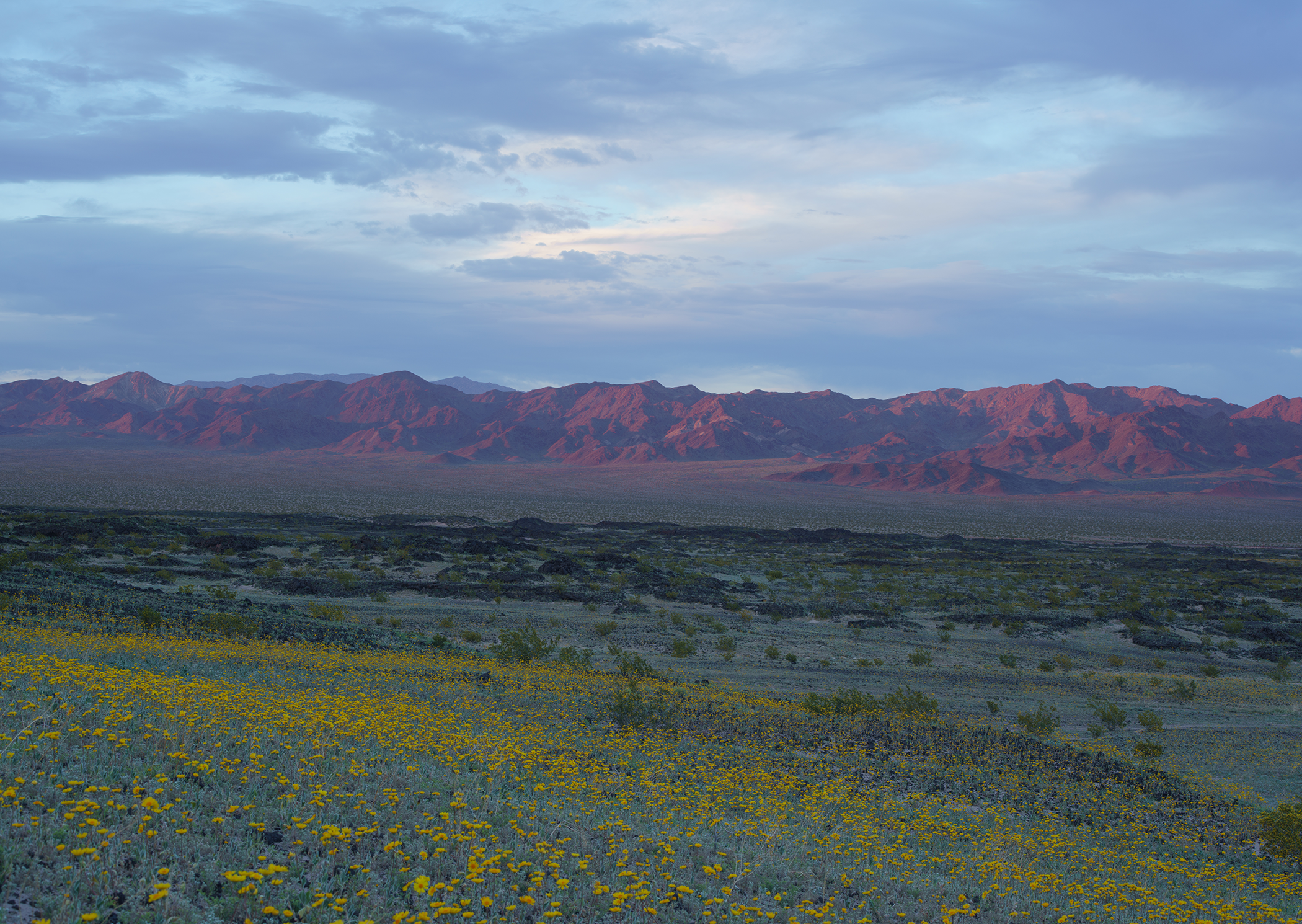
Spring wildflowers erupt from the lava flows at Amboy Crater, part of the 1.6-million-acre Mojave Trails National Monument. Photo by Jack Thompson.
Springs and seeps at Afton Canyon, Fenner Spring, and dozens of smaller sites create riparian refuges that are anything but decorative. They’re lifelines for desert bighorn sheep, desert tortoises, and countless species that time their migrations and movements around these water sources.
The path to monument designation was anything but smooth. Following the Bush Administration's Energy Policy Act of 2005, speculators filed applications to develop 1.6 million acres of pristine California Desert for industrial solar and wind projects, including lands The Wildlands Conservancy had purchased and donated with promises of permanent protection from President Clinton, Vice President Gore, and Senator Feinstein. The Wildlands Conservancy, Senator Feinstein, and a handful of advocates fighting what the press sensationalized as "Green versus Green" but what we reframed as "Green versus Greed."
Acquired by The Wildlands Conservancy with a mix of private and public funding between 1999 and 2004 as part of its California Desert Land Acquisition Project, these checkerboarded railroad lands included private inholdings within Joshua Tree National Park, Mojave National Preserve, Wilderness Areas, and landscape linkages.
What are Railroad Lands?
In 1864, Congress gave the railroad every other section of public land along what are now Interstate 40 and Route 66, creating a checkerboard of public and private parcels. By the 1990s, SF Pacific Properties owned these former railroad lands and posted "For Sale or Development" billboards across the desert between Barstow and Needles. Private sale would have shattered more than 4 million acres of surrounding public lands, turning continuous wilderness into fragmented pieces.
The Wildlands Conservancy identified degraded private lands: fallowed farmlands, contaminated brownfields, and commercial rooftops. We promoted distributed generation and photovoltaic technology over destructive solar thermal projects that required natural gas and vast water resources. After years of brutal public attacks from energy companies and their environmental allies, the conservation community finally united behind protecting wild lands. The fight proved that real environmental leadership isn't about compromise with corporate interests. It's about defending what was promised to be protected forever.
Much more than barren landscape, each of these 640-acre parcels was central in protecting the ecological, cultural, and recreational center of the California desert. These included areas stretching from Amboy Crater and the Pisgah Lava Flow to Afton Canyon and Piute Springs are the most pristine remaining stretch of the historic Route 66 and are home to ancient fossil beds, bighorn sheep, and desert tortoise habitats.
Far from city lights, Mojave Trails also offers increasingly rare, unpolluted darkness. This isn’t just aesthetic; dark skies are ecological resources. Nocturnal animals evolved under stars, not sodium lamps, and protecting night environments is now recognized as essential conservation. The monument preserves not just what we can see during the day but what we’ve lost in most places after sunset: the experience of true darkness and the ecological processes that depend on it.
After years of advocacy, led by The Wildlands Conservancy and Senator Dianne Feinstein, and joined by local communities and stakeholders, as well as nearly every major national environmental organization, President Obama designated the 1.6-million-acre Mojave Trails National Monument on February 12, 2016.
A Living Commitment
Designation was not the end of the story. Threats have emerged: proposed boundary reductions, industrial development pressure, and water extraction schemes. The Wildlands Conservancy, along with our conservation partners, will defend these monuments by every legal and public means available for the sake of protecting the land, its wildlife inhabitants, and those who seek escape into the wild.
As we mark this anniversary, we are reminded that national monuments are not simply lines on a map: they are lifelong commitments to wildlife corridors that still function, to landscapes that still inspire, and to the belief that some places are worth protecting forever.