Following the Flyway: How Protected Lands Support Spring Migration
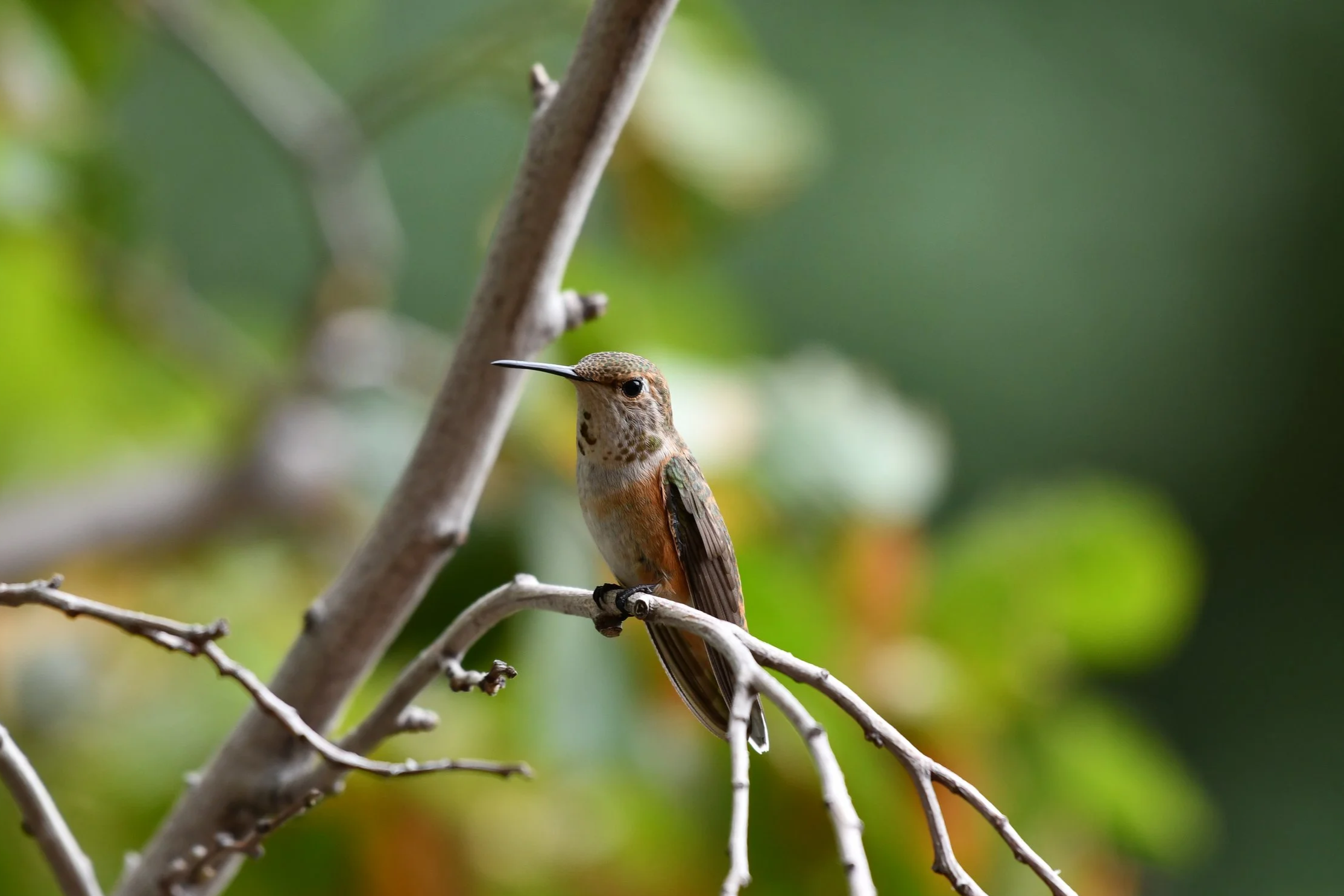
Rufous Hummingbird.
Each spring, hundreds of millions of birds thread an ancient sky road above our preserves.
Spring migration is a months-long pulse, a northward wave of renewal as millions of birds return to their breeding grounds. The whole procession tuned to ancient rhythms, and on a good morning, we can wake to find new arrivals feeding after an exhausting night passage. Daytime winds will also carry raptors past coastal headlands, allowing spectators to enjoy the variety of painted feathers as they pass.
“They are not passing through. They are depending on us — on these specific acres, these specific insects, this specific body of water, this specific and perfect combination of habitat needs — just to make it through the night.”
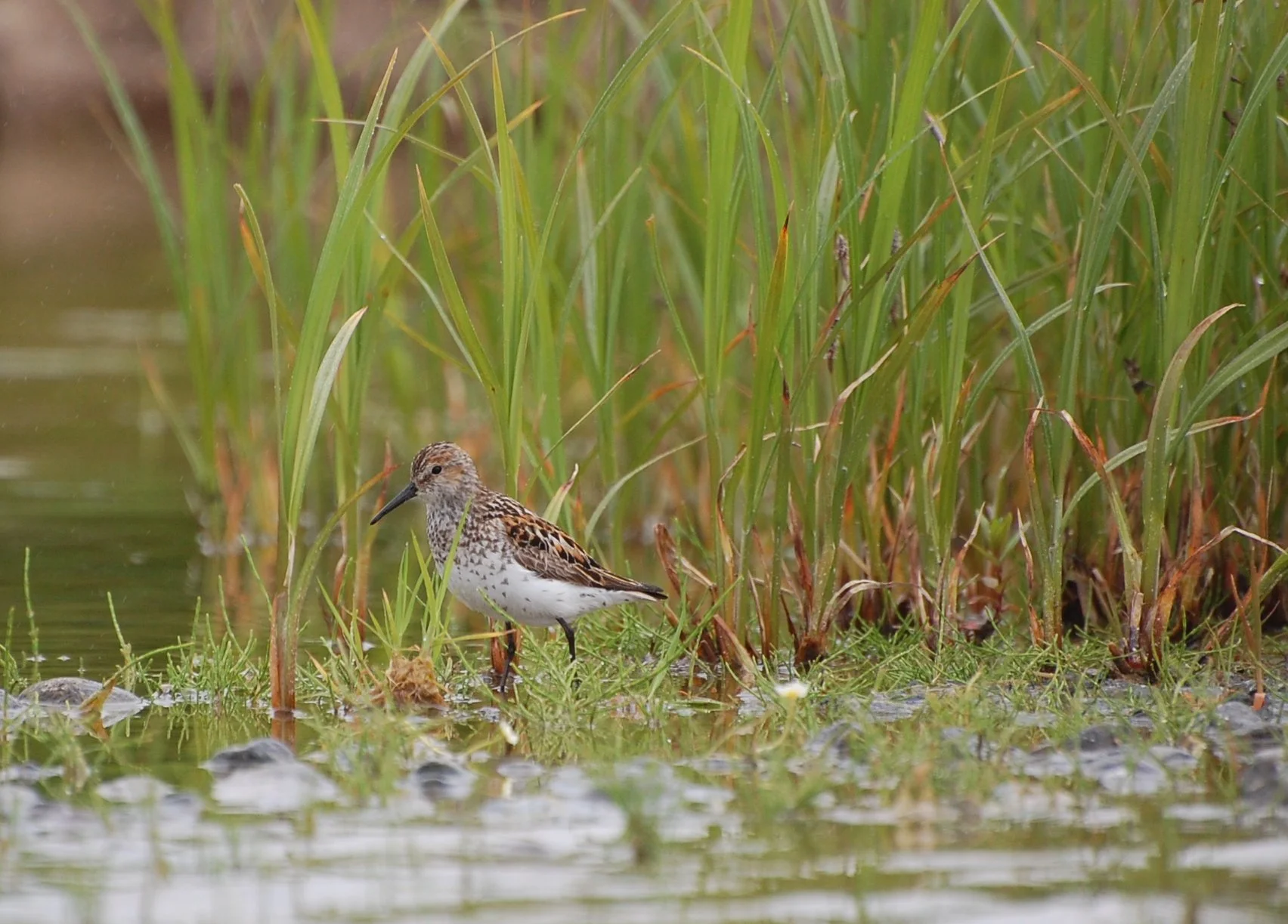
The Pacific Flyway is one of four great migration corridors in North America, a loosely defined avian superhighway stretching from Alaska to some even venturing into Patagonia. Along it, an estimated one billion birds travel each spring. Wilson’s Warblers, the color of ripe lemons, Western Sandpipers with their frenetic, mechanical feeding, and Sharp-shinned Hawks tilting on narrow wings are just some of the feathered wonders that move through the sky year-round.
WHY IT MATTERS
A Stopover Is Not a Rest Stop
The word “stopover” makes migration sound leisurely. It is anything but. A warbler crossing the Mojave in April may land in a riparian thicket having burned through half its body mass. It has perhaps twelve hours to find insects, avoid predators, and double its fuel reserves before conditions are right to fly again. If the thicket is gone — cleared for development, dried up by drought, or fragmented by a road — the bird may not be able to fly to the next one, and a return trip is out of the question.
While migratory birds will use urban and suburban green spaces and agricultural lands, the network of protected natural lands, such as Wildlands Conservancy’s preserves, is the critical backbone of a chain of fuel depots for a journey spanning thousands of miles. The importance of protected lands will increase as more land is converted to development. The loss of wetlands or native forests has had a great impact on bird populations, along with other factors. We know that remove one link and the chain weakens. Restore one link, and you can feel the difference — in dawn chorus volume, in the color of the undergrowth, in the sheer, improbable weight of life moving through.
Species you may encounter:
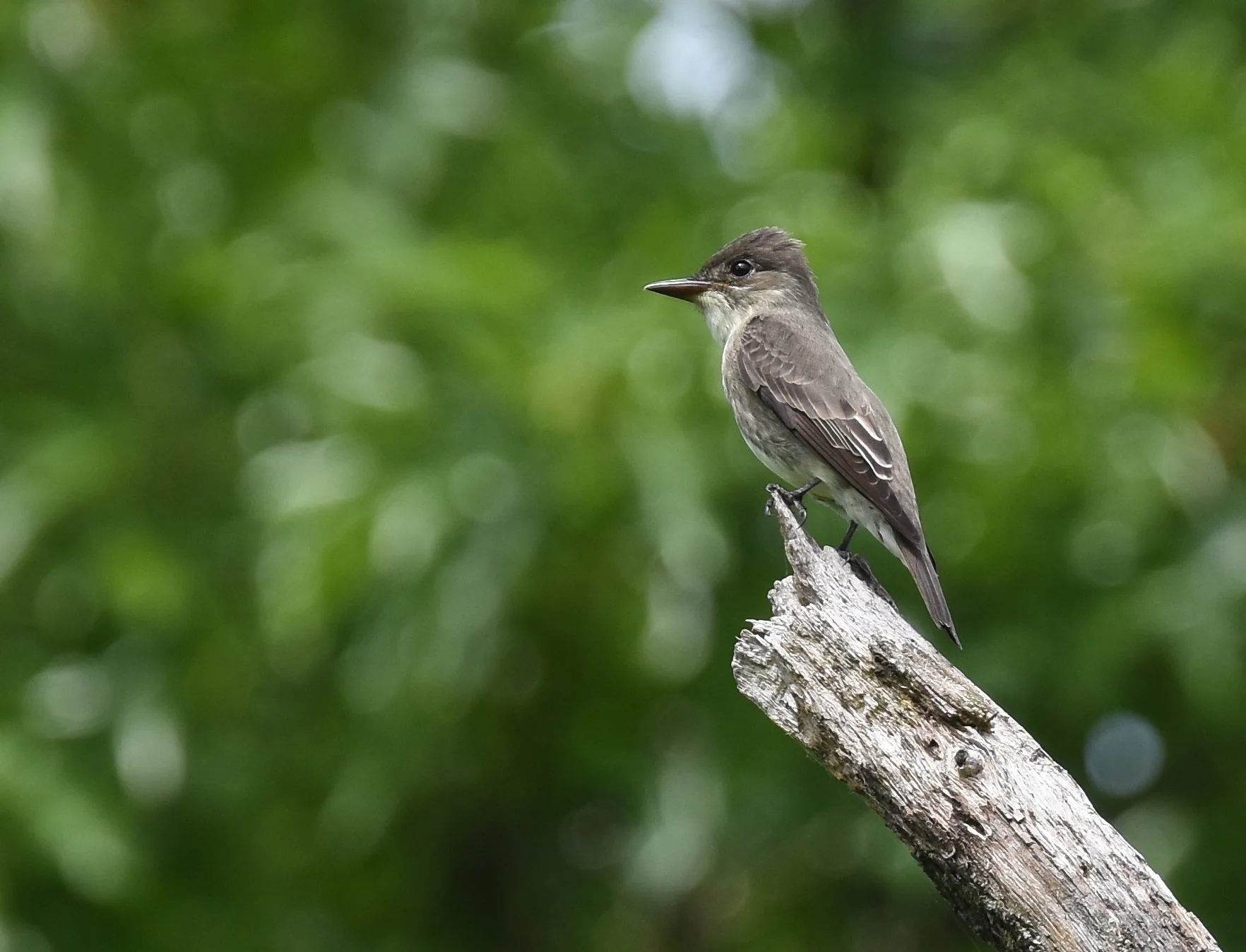
Allen's Hummingbird · Wilson's Warbler · Western Sandpiper · Swainson's Thrush · Cassin's Vireo · Semipalmated Plover · Sharp-shinned Hawk · Marbled Godwit · Long-billed Curlew · Least Bell's Vireo · Olive-sided Flycatcher · Yellow Warbler · Western Tanager · Bullock's Oriole · Lazuli Bunting · Tundra Swan · Willow Flycatcher · Black-bellied Plover · Spotted Sandpiper · Acorn Woodpecker · Green-tailed Towhee · Williamson's Sapsucker · Wood Duck · Whimbrel · Dunlin
ACROSS THE PRESERVES
Where the Birds Land
Migration is not evenly distributed. Birds follow food, water, and cover with consistency and precision — given there are ample resources on the path. Across our preserve system, certain landscapes act as magnets, places with the perfect combination of geography and ecology that support the seasonal visitors with everything they need to finish their migration routes.
-
On the Northern and Sonoma Coasts, the Eel River Estuary and Estero Americano Coasgt, both being estuaries, act as migration’s great concentrators. Shorebirds probe the mudflats at low tide while songbirds work the coastal scrub uplands. Early spring brings waterfowl staging before their final push north; later waves bring songbirds riding the marine layer inland at dawn. The ongoing restoration of coastal prairie and wetland here is not beautification — it is re-weaving a net that supports lives in transit.
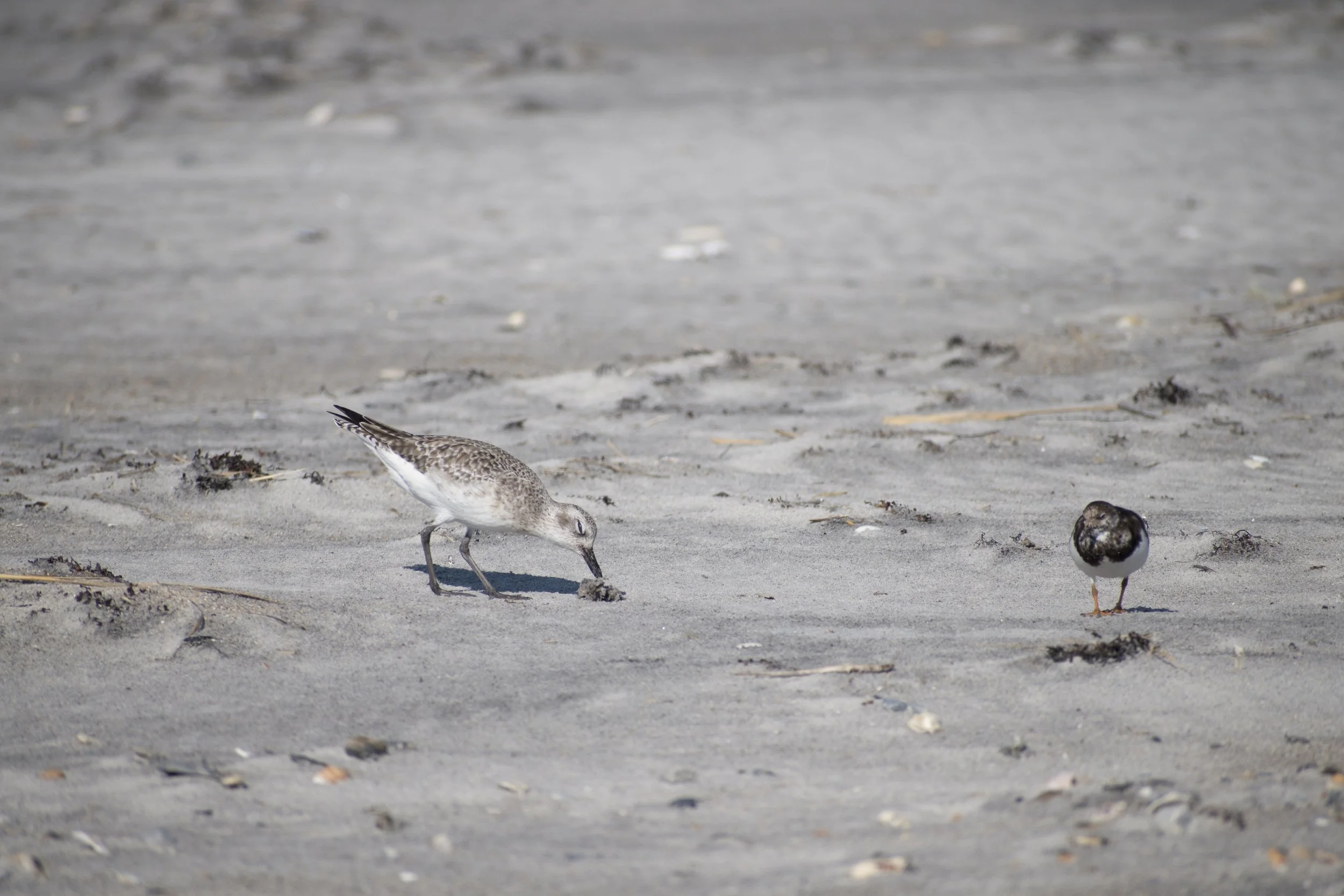
Mudflats and beaches serve as ripe food environments, especially at low tide, where Western Sandpipers, Marbled Godwits, and Black-bellied Plovers pick off the exposed substrates as they probe the mud with their specialized bills.
Many invertebrates, crustaceans, and worms–which are great for the soil, but even better for the birds– are packed just below the surface.
Defined as coastal bodies of water where freshwater from rivers and streams mixes with saltwater from the ocean, estuaries serve as shelter and feeding grounds for migrating ducks and geese, including Northern Pintails, Bufflehead and Scaup. After their long trip, the waters are a refuge.
Because of the abundance of water at Estero Americano Coast and Eel River Estuary, shorebirds converge from late March into mid-May. In those weeks, the preserves can host Western Sandpipers, Dunlin, Marbled Godwits, Whimbrels, and Long-billed Curlews alongside impressive waterfowl concentrations such as Aleutian Cackling Geese (found at Estero Americano Coast), Brant, and Tundra Swans, making their final stop before continuing north. Ongoing restoration work will expand and deepen this capacity further to help them safely complete their journey.
Every Spring, Jenner Headlands Preserve becomes rich with songbirds. Though not an estuary, Jenner Headlands Preserve — with various streams across its 5,630-acre upland coastal landscape— hosts a wide variety of migratory species, including flycatchers, vireos, warblers, and buntings, among others.
A specialty bird for Jenner Headlands and our other Central and Northern California coastal preserves is the Allen's Hummingbird. They winter in the mountains of Oaxaca, Mexico, and migrate north to their breeding grounds along the immediate California-Oregon coast.
-
At the southern end of the San Joaquin Valley you will find Wind Wolves Preserve.
Diving a little deeper into southern California, you will find that riparian corridors in arid country act like funnels, compressing thousands of migrant species into narrow ribbons of willow and cottonwood. A single oasis at Whitewater or Mission Creek Preserve on the right April morning can hold dozens of species, creating a spectacle that can only be seen at this time.
But these corridors are not only for birds passing through. Beginning in March, the riparian habitat along the Santa Margarita River, and similarly along the Whitewater River, becomes a prime breeding destination. Least Bell's Vireo — a federally endangered subspecies — returns here each spring to nest in the dense willow thickets that restoration has helped rebuild. Their arrival is a seasonal marker as reliable as any calendar, and their presence is a direct measure of riparian health: Least Bell's Vireos nest nowhere else.
-
Elevation delays things a bit. While the coast is already noisy with early arrivals, the mountain forests are still waiting to receive the new flocks. In late April and into May, the floodgates open. Warblers fill the oaks. Flycatchers work the forest edge. The restored waterways here do double duty: they support breeding populations while providing the clean, reliable water that migrants cannot do without.
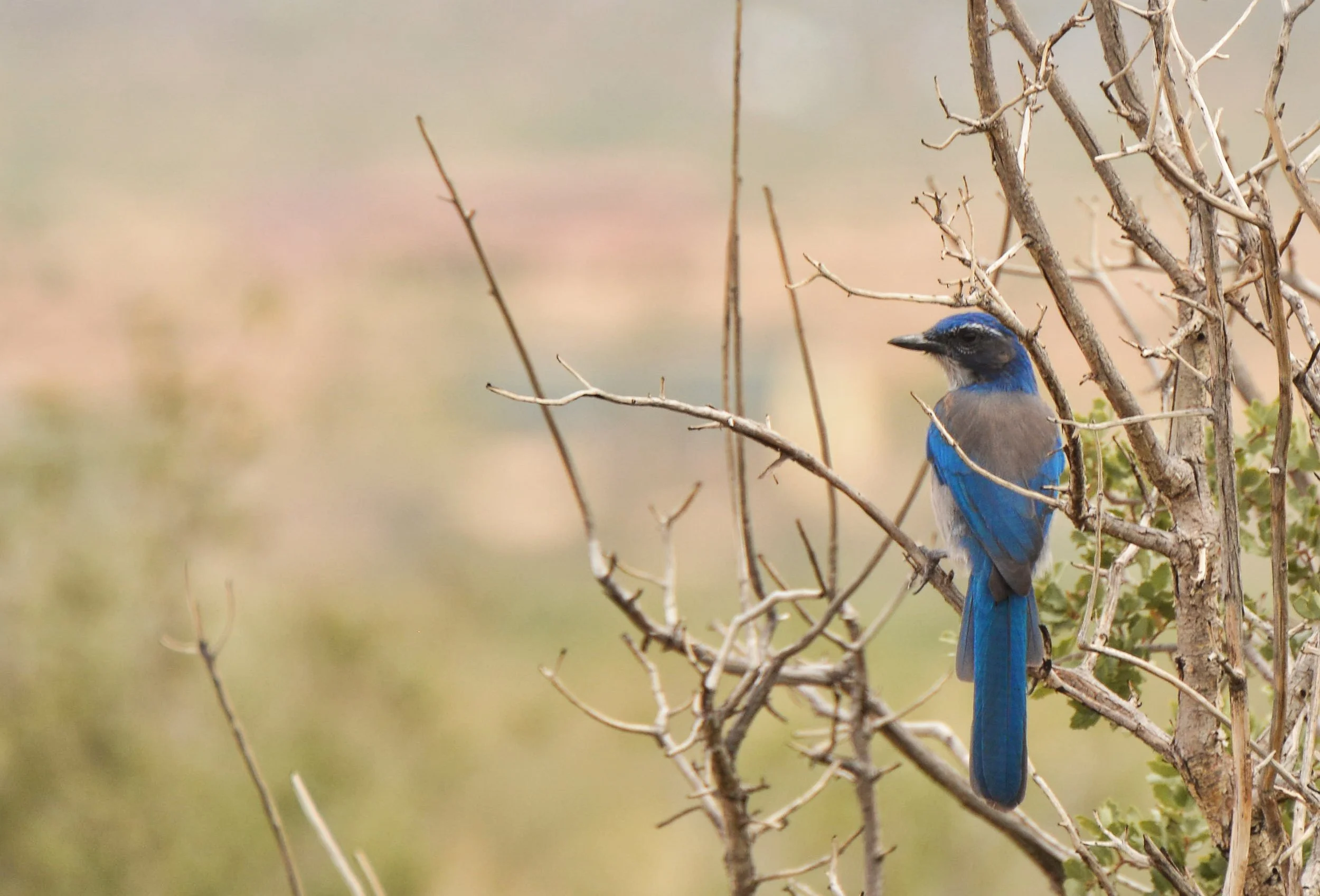
Oak Glen Preserve is also home to a community of year-round residents whose lives are woven tightly into the landscape's ecology. Oak-dependent species — Acorn Woodpeckers, California Scrub-Jays, and Oak Titmice — rely on the preserve's mature oaks not only for food but for nesting cavities and territorial anchor points. A medley of Allen’s and Rufous hummingbirds, present year-round as they track the bloom sequence of native flowering plants, makes the diversity of the preserve's understory a direct determinant of whether these birds thrive or struggle. Restoration here does benefit both migrants passing through while sustaining the resident fabric that holds the landscape together between migration pulses. Situated at 7,600 feet near Big Bear Lake, Bluff Lake Reserve also supports rare high elevation migrants, including Olive-sided Flycatchers, Williamson’s Sapsuckers, and Green-tailed Towhees.
-
The timing tracks the same way at West Walker River, as migratory birds return to the Preserve's riparian corridors to breed. The migratory pattern matches the exact time that the cottonwoods and willows leaf out, the insect communities they support emerge, and the birds follow within days.
Neotropical songbirds arrive in waves all the way into late spring. Yellow Warblers, Western Tanagers, Bullock's Orioles, and Lazuli Buntings move through the canopy, their colors almost incongruous against the high desert backdrop. Beneath them, the dense thickets provide nesting cover for the riparian specialists: Willow Flycatchers, Ash-throated Flycatchers, and Black-headed Grosbeaks.
Migratory birds seek the perfect balance of habitats that meet their needs. Diet + Safe Housing = Repeat visitors. This is why TWC chooses to uphold our rigorous conservation standards.
Along the river's calmer stretches, Wood Ducks, Cinnamon Teals, and Mallards use the slower water, while Spotted Sandpipers pick along the banks with their characteristic bobbing walk. West Walker is not a stopover in the traditional sense; it is a destination — a place birds return to in order to raise the next generation of migrants.
-
Tucked between the San Juan River and the Abajo Mountains along the boundary of Bears Ears National Monument in Utah's canyon country, Speaking Springs functions as something less visible but equally important: a threshold, a stepping stone connecting two larger systems through terrain that would otherwise be nearly impassable for small birds.
The preserve's two-mile corridor of spring-fed wetlands and riparian forest is, in energetic terms, a refueling depot. For passerines navigating the rugged red-rock landscape, the canyon floor offers a concentrated source of insects and water in a setting where both are otherwise scarce. While formal species surveys are ongoing, the spring migrant community here mirrors what one would expect from the region: Yellow Warblers, Western Tanagers, Bullock's Orioles, and a rotating cast of swallows and flycatchers that track insect hatches up the drainage. Without the corridor connectivity that Speaking Springs provides, birds face a much longer and riskier crossing between suitable habitats — and in migration, distance is calories, and calories are survival.
The Magic Of Restoration
In its entirety, The Wildlands Conservancy’s goal is to protect the beautiful landscapes and let nature thrive.
A healthy riparian corridor hums with life, an array of willows and cottonwoods and an understory of grasses and shrubs supporting insects and birds; a degraded one is quieter, degraded by exotic species, emptier, and therefore providing little to a bird running on fumes.
When it comes to supporting bird species, native plant restoration is, at its core, insect farming. The native willows and oaks that restoration crews plant are host plants and support hundreds of invertebrate species that exotics do not. More insects mean more food, which means more birds that make it to their final destination. Rewilding the landscape increases its ecological complexity: more niches, more species, more resilience against the droughts and heat waves that are becoming baseline conditions across the West.
“The goal is not to make the land look wild. The goal is to make it function wild — to rebuild the ecological systems that migration depends on.”
But functioning wild means functioning in a climate that is continually changing. Snowpacks are melting, leading to spring now arriving later every year. Streams that birds have followed for generations run dry weeks earlier than before, or flood when storms arrive compressed and intense. The reliable water that a bird needs as it burns its reserve may no longer be counted on with the shifting water patterns. Climate change stresses the landscape, desynchronizes the migrants' arrival, the insect hatches, and the flowing water that the birds evolved to expect.
This is why restoration work is crucial. It is about building resilient landscapes that absorb the shock of what is coming by restoring floodplain function, planting natives that can tolerate a wide range of conditions, and maintaining connectivity so that more stopovers have plentiful resources as they arrive.
Connectivity matters as much as any single site. A chain of healthy preserves allows birds to move safely between stopovers, to course-correct when conditions change, to find water when a particular spring runs dry. No single preserve can sustain migration. The system — the linked, breathing whole — is what does the work.
WHAT TO LOOK FOR NOW
Migration peaks in the hour after first light. That is when the birds that flew through the night are dropping in, hungry and disoriented, and when the diurnal migrants are just beginning to move.
In those first hours, an estuary edge or a riparian thicket can feel almost tropical — noise and color on all sides, movement at every scale, the sense of witnessing something vast that is also intensely, briefly, here.
Watch for concentrations around water. Watch for unusual activity in the treetops — a warbler you don’t recognize, a thrush moving with a particular urgency, a hawk sitting low. Migration is fleeting by definition. A bird present this morning may be two hundred miles away by evening. The window is short. The door is open now.
These preserves do not exist in isolation. They are nodes in a living network that extends from the Arctic tundra to the tropical forests of Central America — a network that billions of birds navigate each year by starlight and magnetic field and the remembered geometry of a coastline. What we protect here is never just a piece of land. It is a piece of the journey.